
The Complete Kilimanjaro Packing List – Everything You Need to Know
Kilimanjaro Packing List with essential gear, clothing, and expert tips to prepare for a safe and successful Mount Kilimanjaro Trek.
You need to be well-equipped with the right gear for withstanding the varied weather conditions and achieving a successful climb.
Hence, we have created a complete Kilimanjaro Packing List to guide you through all the essentials that could make all the difference in your climb.
From essentials to tackle the shifting weather conditions, to gear designed to make the trek more comfortable, we have covered it all.
Ready to start the packing for Mount Kilimanjaro Climbing Tours ? Here's everything you need to ace your trek, neatly compiled and ready to check off!
Packing For Kilimanjaro
Travelling to Kilimanjaro involves both international travel and backpacking.
One key aspect of the Kilimanjaro Packing List is to keep your travel clothing and gear separate from your climbing gear, preferably in different luggage or duffel bags.
You can leave these non-climbing essentials at a hotel or guide office and carry all the climbing essentials on your trek up Kilimanjaro.
Packing List for Kilimanjaro:
The Daypack
For the actual climb, you'll need a medium-sized daypack (25–35 Liters). Your Kilimanjaro Daypack should include a sun hat, sunscreen, sunglasses, snacks, packed lunch, gloves, water, money, a passport, a camera, and extra warm clothing.
Packing List for Kilimanjaro:
The Duffel Bag
The remaining gear for Kilimanjaro goes into a large, rugged, waterproof duffel bag, ideally of 95-litre capacity.
This bag is carried by Kilimanjaro Porters from camp to camp and should not exceed 33 lbs. (15 kg). Also, it’s advisable to pack your items in garbage bags before stashing them in the duffel for extra waterproofing.
Key Points:
- Separate travel and climbing gear into different bags.
- The daypack should include essentials for daily hiking needs.
- The duffel bag should contain the remaining clothing and gear and should be waterproof and lockable.
- Keep the duffel bag weight under the specified limit (33 lbs. or 15 kg).
Preparing your Packing List for Kilimanjaro involves careful contemplation of three essential factors - the weather, altitude, and the duration and type of your trek. These elements will significantly impact the gear you need for a successful Kilimanjaro Climb.
Impact Of Weather:
During your Mount Kilimanjaro Hike, the weather is the most crucial factor to consider.
The dry periods, January-March and June-October, are optimal for trekking, while April-May and November-December present more challenging weather conditions.
Each altitude level, from the humid rainforest at 800m-3000m to the icy Glacial zone at 5000m-5895m, presents unique weather conditions, influencing what you pack for Kilimanjaro.
Altitude Considerations:
The altitude on your Kilimanjaro Trek can make conditions more unpredictable and colder.
Risks like frostnip and frostbite are more common at higher altitudes and get worse with low oxygen levels.
This makes the selection of the right gear in your Kilimanjaro Gear List all the more crucial.
Duration And Trek Type:
The length of your trek, typically between 5-9 days, dictates the quantity of gear you'll need.
Even though Kilimanjaro Porters will assist in carrying gear, you should ensure your duffel bag's weight is manageable, ideally not exceeding 15kg-20kg.
This consideration will affect your Mt Kilimanjaro Packing List.
Key Note: –
Remember, knowing What to Carry in Your Daypack on Kilimanjaro, understanding the gear you need to climb Mount Kilimanjaro, and selecting the Best Gear for Kilimanjaro are integral for a successful hike.
Clothing For Mount Kilimanjaro
Climbing Mt Kilimanjaro requires thoughtful preparation due to the mountain's unique and often cold weather conditions.
As temperatures can range from 18°C in the rainforest to -5°C at the peak, it's crucial to dress in layers that can be easily adjusted as the weather changes.
- Dress in layers to handle temps from 18°C to -5°C.
- Wear breathable, waterproof jacket and pants.
- Bring a warm down jacket or thick fleece for cold nights.
- Use a mid-layer fleece and lightweight base layers.
- Choose quick-dry trekking pants (convertible to shorts are a plus).
- Pack synthetic or Merino wool underwear; fresh daily.
- Carry waterproof gloves and thin liners; mitts for summit.
- Trekking T-shirts work early on; Merino wool is best.
Footwear For Kilimanjaro
- Choose waterproof leather boots with strong ankle support and a stiff midsole.
- Make sure boots have enough room for swollen feet.
- Bring spare laces and dry footbeds.
- Use trekking socks early on; switch to warm wool socks for summit night.
- Pack lightweight shoes or sandals for comfort at camp.
Headgear And Eyewear For Kilimanjaro
- Use a stretchy buff or fleece for sun, dust, and wind protection.
- Wear UV400 sunglasses with side shields to guard against strong UV rays.
- Bring a wide-brim sun hat to prevent sunburn and heatstroke.
- Pack a warm thermal hat for cold temperatures.
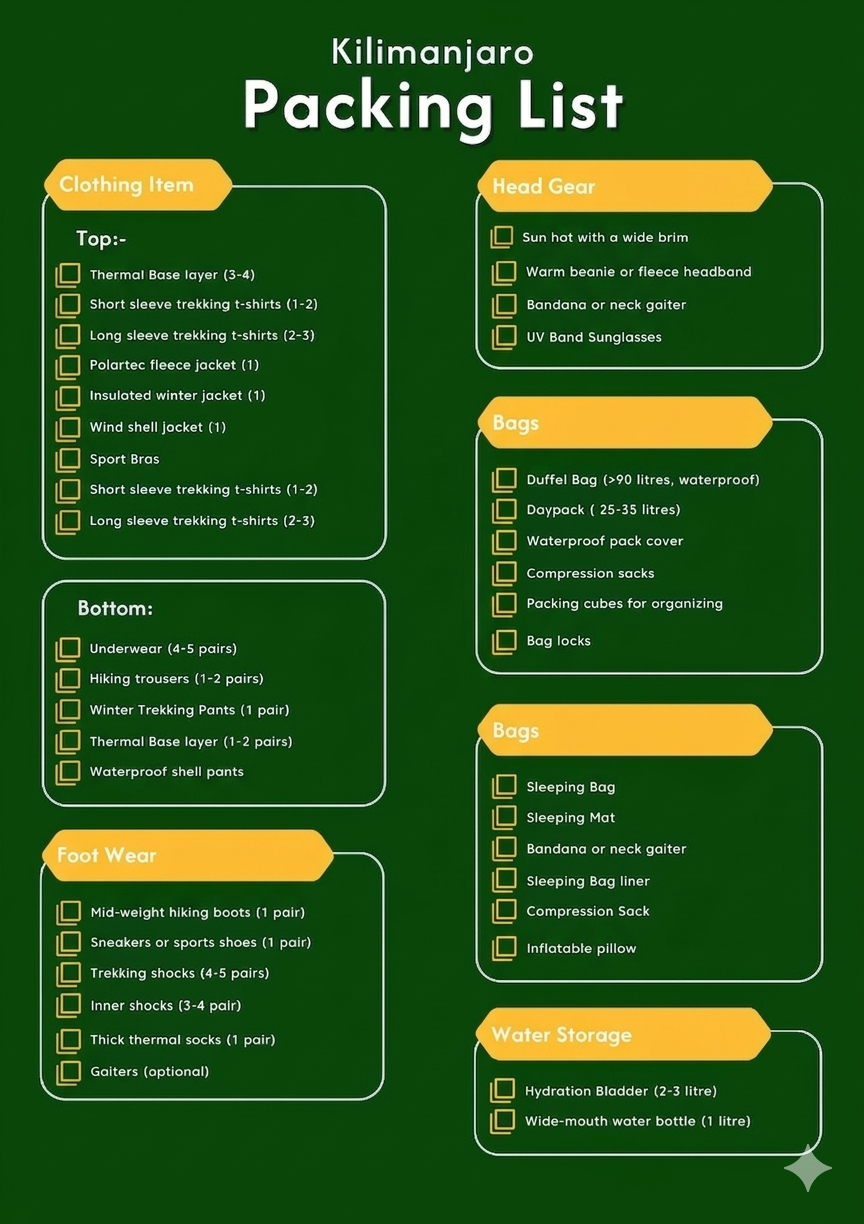
- Alternatively, you can also download our Kilimanjaro Packing List PDF which contains all the list of items and tick off the checklist after stashing them inside your bag.
Basic Equipment
These are tools and items that are directly related to your climbing experience, ensuring your safety and comfort throughout the journey.Having a collection of these essential basic equipment can significantly impact the success and enjoyment of your trek.
Here's a simplified list of basic equipment that should be added to your Kilimanjaro Gear List:
Sleeping Gear
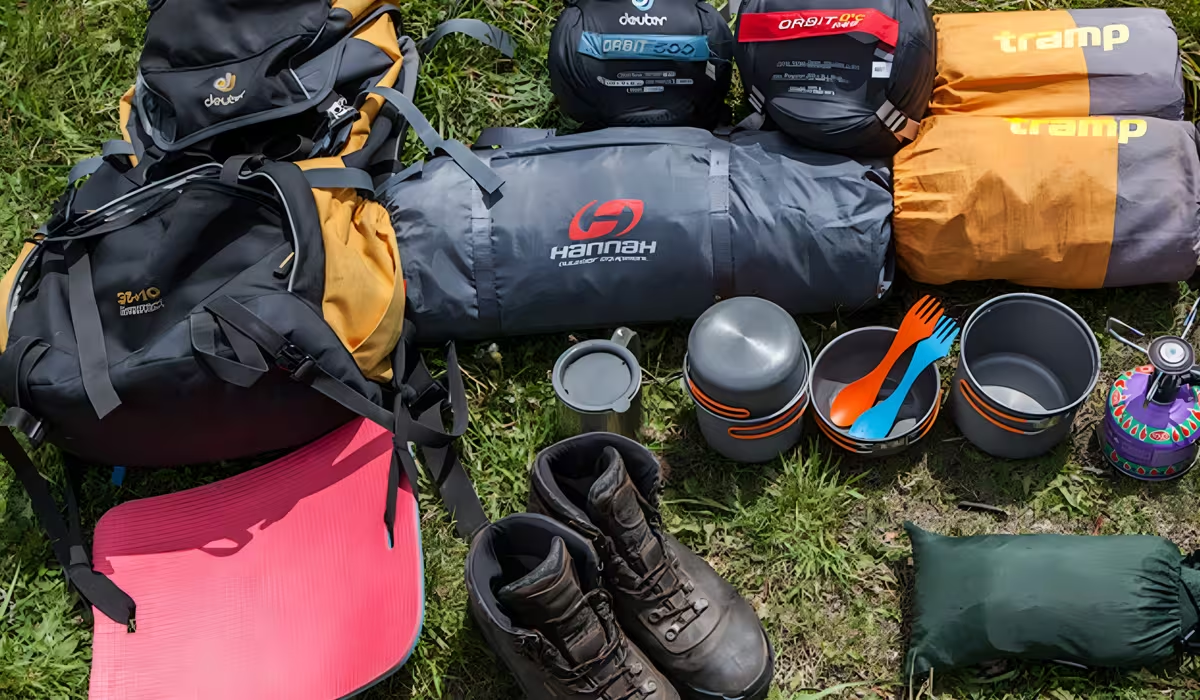
Chilly nights on Kilimanjaro call for a four-season or -20°C rated sleeping bag. Also, don't forget to pack a compression sack to minimize space usage.Additionally, you can carry an insulated mat and inflatable pillow to protect yourself from chilly weather. That way, you will have a comfy sleep space for yourself.
Wild Wonders Recommendations: In case you don't have one, sleeping bags can be rented from our team in Tanzania.
Trekking Poles
Utilizing trekking poles is a matter of individual choice, yet they are highly suggested to aid with stability and lessen tiredness.You have the option to either rent or purchase these poles, but it's advisable to familiarize yourself with their use in your local surroundings before your trip.
Water Storage
You need to have the ability to carry at least 3 litres of water with you.A combination of a 2-3 litre hydration bladder and a 1-litre bottle is a good setup.
Please note that disposable plastic bottles are not allowed on Kilimanjaro to protect the environment.
The Gear List for Climbing Mount Kilimanjaro is given in the below table. Do have a look!